Lake Albert, which is also known as Albert Nyanza, sits on the loosely defined and contested border between the Democratic Republic of the Congo and Uganda and it is also the northernmost of the African Great Lakes. The lake is the seventh largest lake in Africa and is fed by the Victoria Nile which flows from Lake Victoria to Lake Kyoga and then to Lake Albert. The lake was named for Prince Albert, Queen Victoria’s consort and it became known to the western world in 1864 when it was discovered by Sir Samuel Baker. When Mobutu Sese Seko reigned as the dictator of Zaire (now Democratic Republic of the Congo) he named the lake after himself and officially changed the name of Lake Albert to Lake Mobutu Sese Seko. After Mobuto Sese Seko fell from power Lake Albert was restored as the name of the lake.
One of most important and relevant issues in the Democratic Republic of the Congo aside from the civil war is that oil deposits were recently discovered the Albertine Basin, beneath the lake bed in the sediment, which due to loosely defined borders in Lake Albert has spurred an armed conflict between the Democratic Republic of the Congo and Uganda which prompted UN peacekeepers to intervene. The conflict over the oil in Lake Albert has resulted in fatalities for both armies, but unfortunately innocent civilians have been caught in the crossfire including a British geologist who was working for the Heritage Oil Company which was hired by the Ugandan Government. Additional oil was discovered below the surface of the east coast of Lake Albert, but this oil is not disputed as it clearly belongs to Uganda.
The Democratic Republic of the Congo is one of the many countries that has fallen victim to the African curse of abundant natural resources. This is a curse because the Congolese economy is dependent upon the commodity markets and it fluctuates with the price of commodities such as diamonds, cobalt, and oil. The oil in Lake Albert is estimated to have enough oil to produce slightly less than 100,000 barrels of oil per day for only ten years which would not ensure financial stability for the Congolese economy. The revenue produced by the oil from Lake Albert would provide an opportunity for the diversification of the Congolese economy into industrial and technological markets. The diversification of the Congolese economy would help to stabilize the economy and provide a safety net if the value of a particular Congolese commodity plummets.
Rukwanzi Island, a small island in the southern region of the lake, has become one of the center points in the struggle between the Democratic Republic of the Congo and Uganda. Rukwanzi Island was home to about a thousand fishermen most of who have fled since the Congolese military occupied the island. The island was part of Uganda, but the government abandoned the island because they feared that it was sinking into the lake. Recently the Democratic Republic of the Congo claimed the island and established a military encampment on the island. Both the Congolese and Ugandan government’s want ownership of the island because it could serve as a base for oil mining in the lake.
There are also several ecological issues associated with Lake Albert including eutrophication, hypoxia, a decreasing fish population, and reduced biodiversity in the lake. Eutrophication is caused by excess nutrients in the lake in particular high nitrate and phosphate levels, which would be exacerbated by industrializing the lake in order to mine for oil. Hypoxia is an oxygen deficiency which both exacerbates and is exacerbated by eutrophication. Algal blooms from eutrophication serve as a barrier that blocks dissolved oxygen from reaching fish and plant life in the deeper portion of the lake. When the fish and plant life decays it produces nitrogen which is converted to nitrates and further contributes to the eutrophication of the lake. Hypoxia and eutrophication have adversely effected the fish population and biodiversity of the lake. Over fishing particularly by Ugandan fisheries has also greatly contributed to decreased fish population in Lake Albert. The Ugandan fisheries have also introduced nonnative species which have damaged the equilibrium of the natural ecosystem in Lake Albert and appreciably contributed to the recent decrease in the biodiversity of Lake Albert. Ironically the Nile Perch (Lates niloticus) and the Nile Talapia (Oreochromis niloticus) were taken from Lake Albert and transferred to Lake Kyoga and Lake Victoria where they have similarly disrupted the natural ecosystem and caused a decrease in biodiversity in both of the lakes.
[i]Drinking Water As in many countries in Sub-Saharan Africa the safety of drinking water is a major problem in the Democratic Republic of the Congo. Diarrheal diseases such as cholera, typhoid, and dysentery are the main concern. There are also some diarrheal diseases such as trachoma which can often cause blindness. During his congressional testimony in 2000, Peter Lochery, a senior advisor for the relief agency CARE, stated “Water-related diseases including diarrhea are the single largest cause of human sickness and death.”
[i] It has been estimated that three million children die of diarrheal diseases each year. The Democratic Republic of the Congo suffers from many of these water safety issues and there was recently a widespread outbreak of cholera in one of the northern provinces of the Democratic Republic of the Congo. Most drinking water in the Democratic Republic of the Congo is unsafe and most be boiled to eliminate fecal coliform bacteria.
The water from Lake Albert is becoming to high nitrate levels due to the eutrophication of the lake. Consumption of water with high nitrate concentrations by infants under six months old can cause methemogolbinemia, more commonly known as blue baby disease, which can cause death. Methemoglobinemia is the result of nitrates converting the hemoglobin in red blood cells, which carries oxygen through the body, into methemogolbin, which can not carry oxygen and if untreated will result in death. Methemoglobinemia is highly noticeable because it cause skin to become bluish-gray if diagnosed it is easily treated. Unfortunately, many Congolese citizens are unaware of these symptoms and many do not have sufficient access to healthcare. Additionally, long term consumption of water with high nitrate concentrations have recently been linked to certain cancers by several medical studies. Also, when pregnant women drink water with high nitrate concentrations, it has been shown that the baby is placed at an increased risk of deformity.
Deforestation of Congolese rainforests also contributes to water problems. Typically plants alongside rivers will absorb nutrients such as nitrates and phosphates from the river as it passes. As these plants die off more and more of these nutrients flow into still water bodies such as lakes or ponds where high levels of phosphates and nitrates causing eutrophication and then hypoxia which can devastate aquatic ecosystems. Additionally, deforestation also causes riverbanks to erode much more rapidly than they would naturally.
[i] Global Access to Safe Water: Mr. Peter Lochery; Congressional Testimony 10-12-2000
[i] http://cat.inist.fr/?aModele=afficheN&cpsidt=17337796
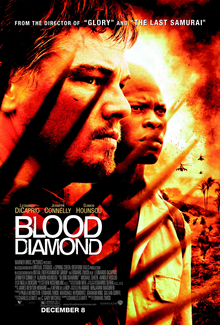
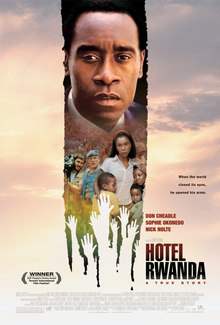
 Idi Amin’s regime in Uganda in the 1970’s. Though the story of the Scottish doctor is fictional the movie reveals many truths about Idi Amin and the stereotype harsh African dictator. Like Hotel Rwanda, The Last King of Scotland was made long after the events it portrays. The problem with this is that it allows some viewers to believe that the realities of these films are outdated. Although Blood Diamond is a work of fiction, it places the viewer in the present with the real issue of conflict diamonds. As a result of the movies message much more attention has been paid to conflict diamonds and other conflict minerals. Activists and authors have directed attention not only to conflict diamonds but to conflict minerals, such as columbite tantalite in the Democratic Republic of the Congo which is used in cell phones, laptops, and Sony Playstations (cf. “The Congo’s Resource Curse” in the archives).
